
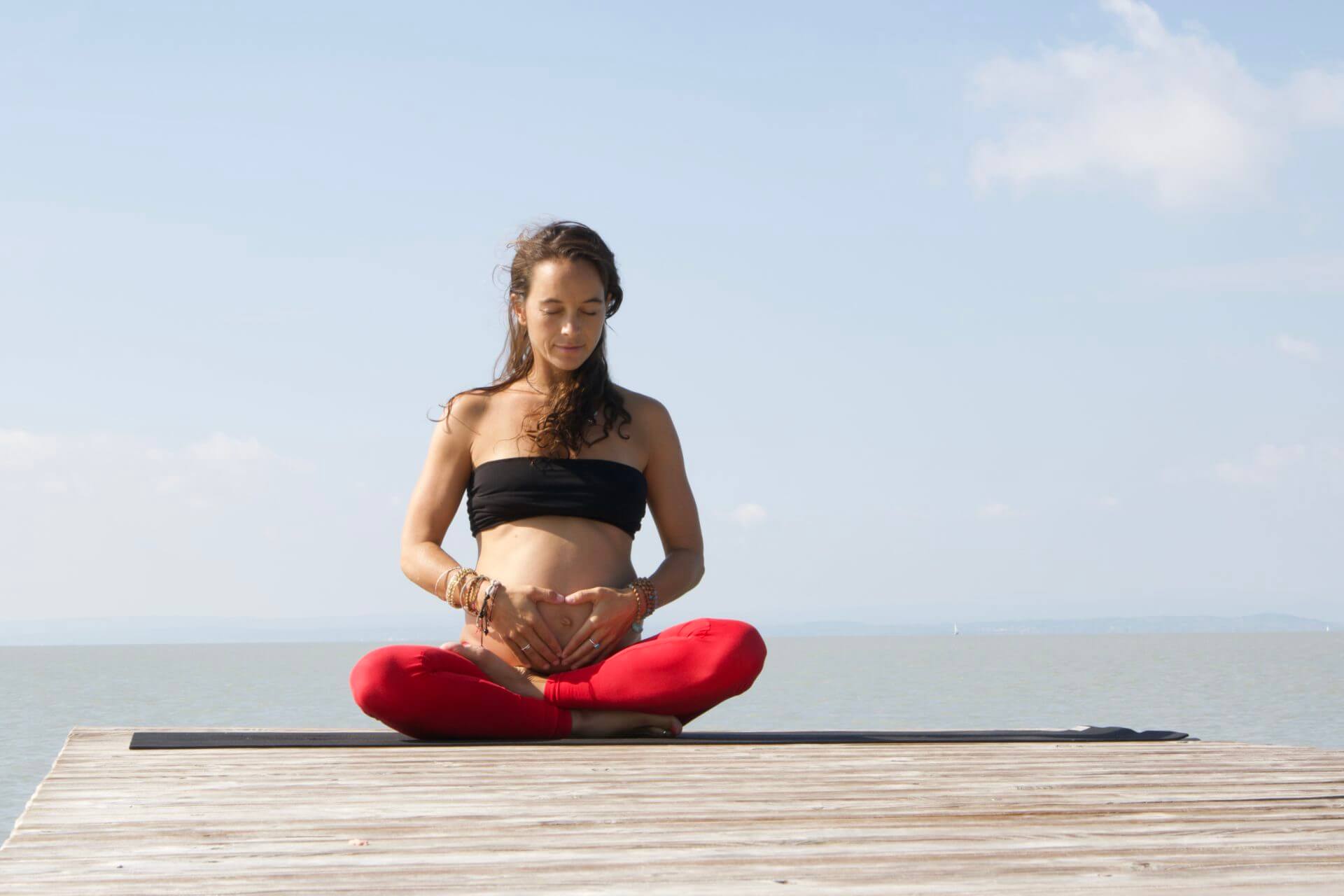
A brief introduction to the pelvic floor
From a yogic perspective, the pelvic floor is the seat of our life energy (=prana). This area of our body has a major influence on our posture and gives us stability and inner strength. But our emotional world is also influenced by the pelvic floor.
If we look at the different chakras in the body, the area of the pelvic floor is the root chakra, as the first essential main chakraand forms an important basis for the development of the entire chakra system:
“The root chakra can be strongly influenced by the experience of security and the relationship and connection with one’s own mother at the beginning of life — the soul’s first point of reference for the general experience of life in this world.”
From an anatomical point of view, the pelvic floor is a muscle plate that closes the pelvis from below. You can think of it as a trampoline that is stretched between the pubic bone, coccyx and the two ischial tuberosities. You can find more information on the anatomy of the pelvic floor in this blog post
And because your pelvic floor is so important during pregnancy, we have collected a few exercises for you that you can do in between to strengthen and relax your pelvic floor.
Your pelvic floor exercises
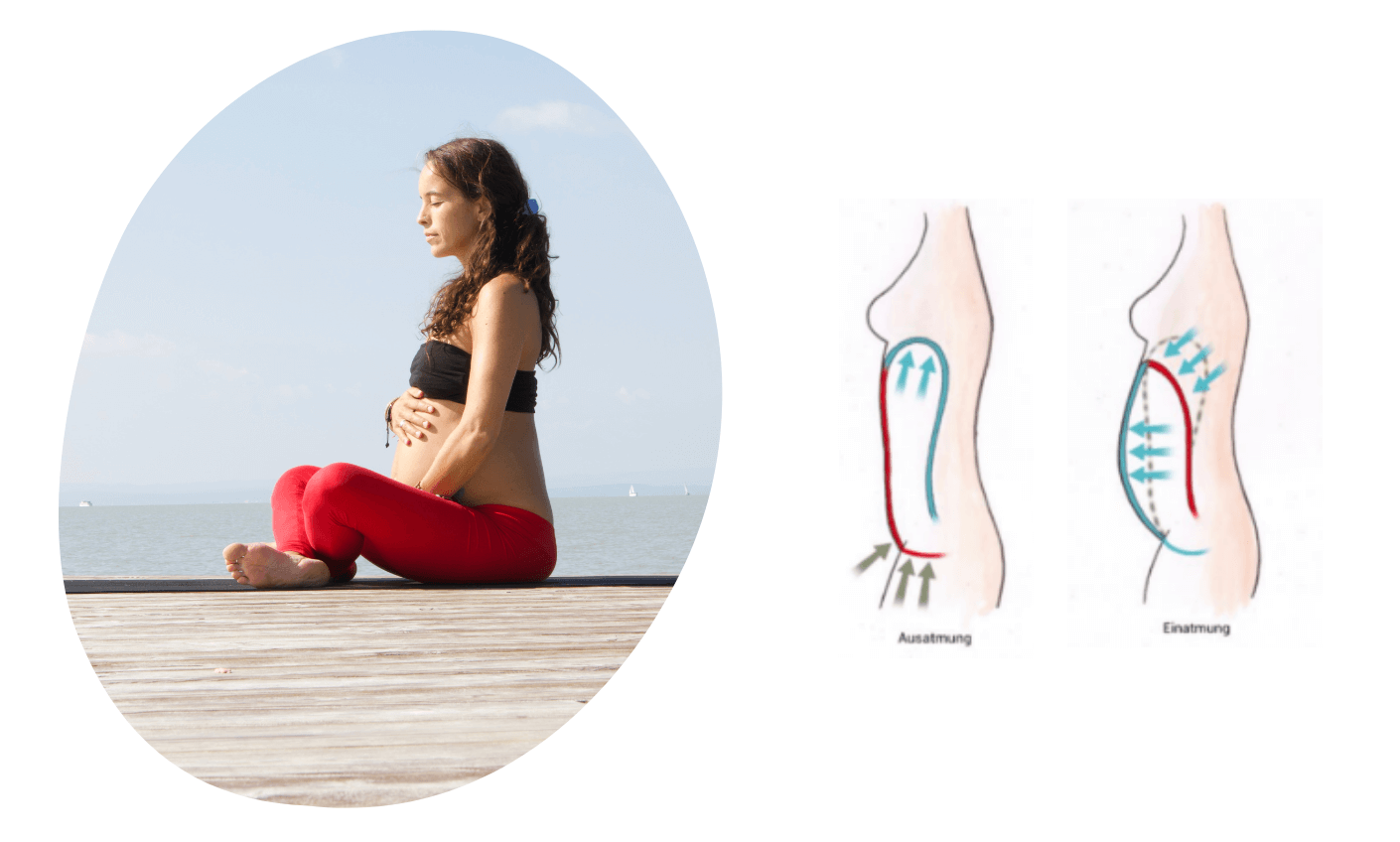
The AHA Breathing = Breathing-posture approach
You can integrate AHA breathing into your everyday life at any time, whether standing or sitting, waiting for the bus or sitting on the couch in the evening.
- Make sure your posture is straight
- Now breathe deeply into your abdomen
- Actively tense your pelvic floor as you exhale
You can imagine your abdomen like a balloon. When you inhale, the balloon pushes outwards; when you exhale, the balloon is compressed upwards by tensing the pelvic floor.
Cat & Cow to relieve the back
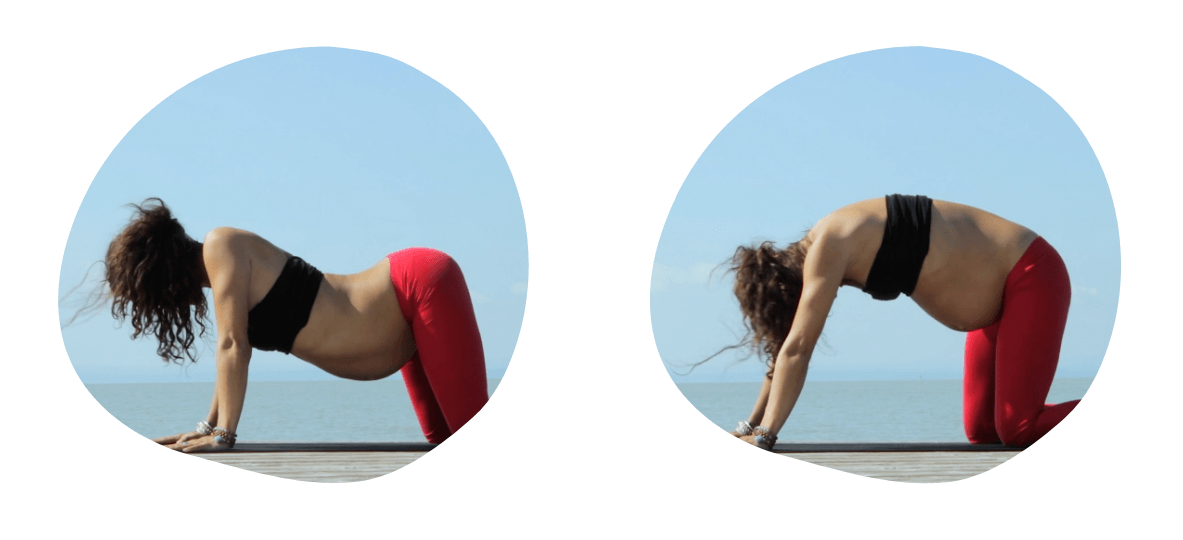
Starting position “table”
- Fan your hands out wide and position them directly under your shoulders
- Align your knees hip-width apart under your hips
- Make sure your back is straight and active
“Cow”
- Take a deep breath
- Actively tighten your pelvic floor
- Lower your stomach and raise your chest
- Look gently upwards & backwards with your head
“Cat”
- Breathe out
- Round your back upwards
- The chin tilts towards the chest
- Make sure that your wrists remain level with your shoulders
Deep squat for relaxation
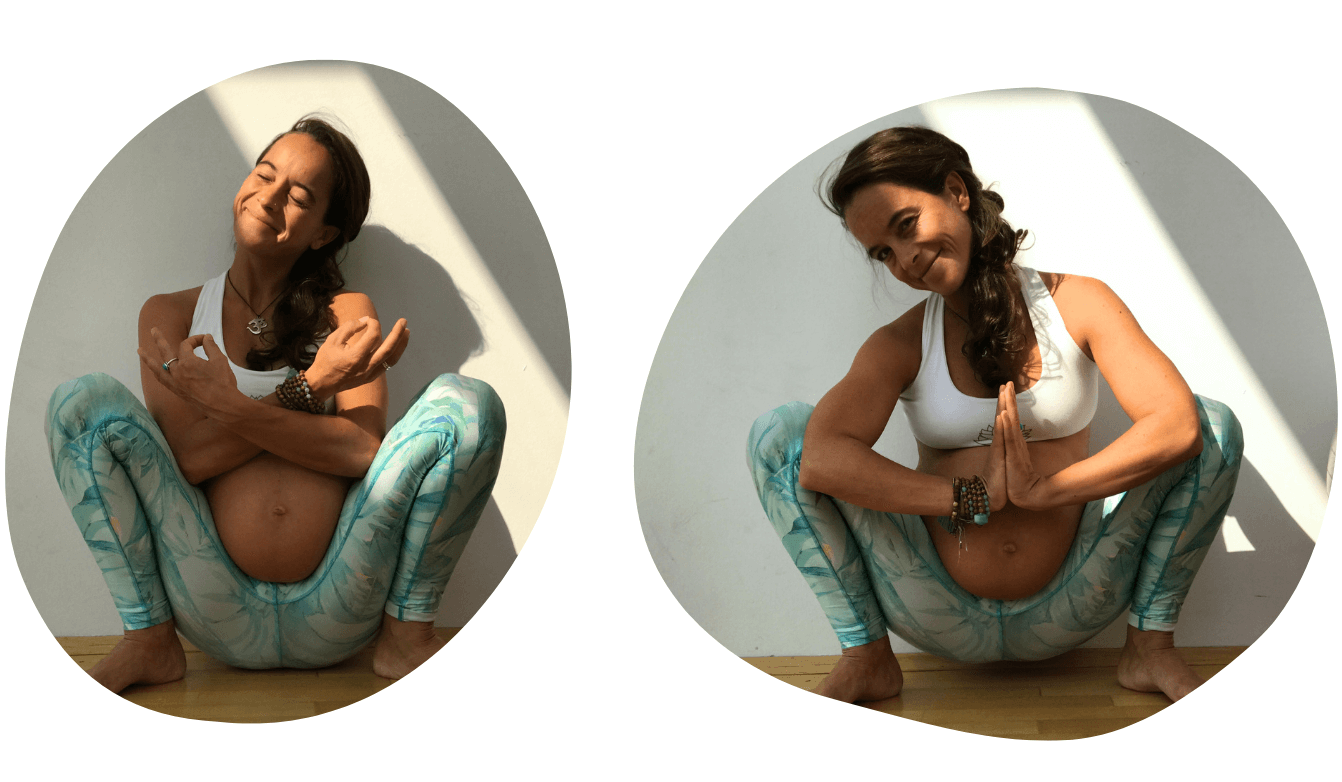
The deep squat, also known as “Yogi Squat” or “Malasana”, brings you relaxation, grounding and at the same time stretches and mobilizes your pelvis. It also stimulates blood circulation in this area and relaxes the muscles.
- Bring your feet slightly wider than hip-width apart
- Squat down carefully
- If the soles of your feet remain on the floor, your pelvic floor is automatically tensed
- Make sure your back is straight
- Bring your hands together in front of your chest
- Use your arms to push your knees outwards a little more
Let gravity work with you & hold this position as long as it feels good for you.
Have fun practicing!